Creating a home office that balances comfort and productivity can transform your work-from-home experience. Whether you’re starting from scratch or updating an existing space, a well-designed office helps you stay focused, reduces stress, and boosts efficiency. Here are some practical tips to help you build a home office that works best for you.
Choose the Right Location
Selecting the ideal spot for your home office sets the foundation for productivity. Consider these points:
– Quiet Area: Pick a part of your home with minimal distractions and low foot traffic.
– Natural Light: If possible, choose a space near a window to take advantage of natural sunlight which can improve mood and focus.
– Space: Ensure the area has enough room for your desk, chair, and storage needs without feeling cramped.
– Ventilation: Good air circulation is important to keep the space fresh and comfortable.
Invest in Ergonomic Furniture
Comfort is key when you spend hours working at your desk. Ergonomic furniture supports your body and reduces the risk of discomfort or injury.
– Office Chair: Select a chair with adjustable height, lumbar support, and comfortable cushioning.
– Desk: Choose a desk that fits your equipment and allows comfortable arm positioning. Adjustable desks, especially sit-stand options, can promote better posture.
– Accessories: Consider keyboard trays, monitor stands, or wrist rests to prevent strain.
Organize Efficiently
A clutter-free workspace helps you stay focused and reduces stress.
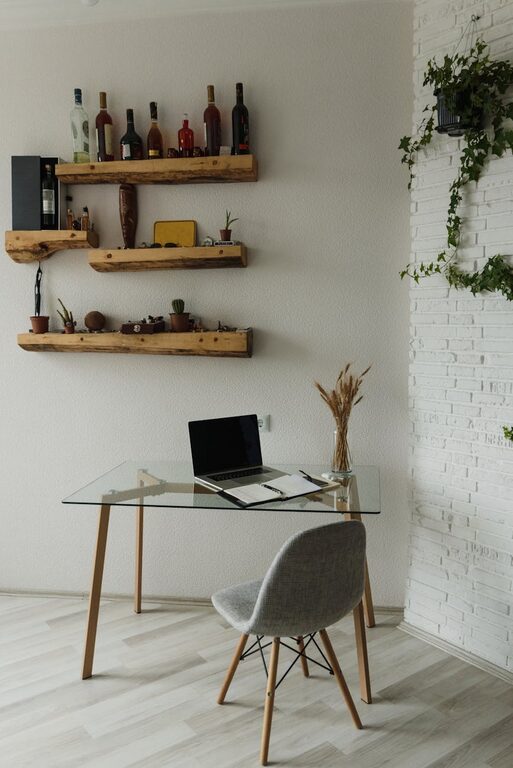
– Storage Solutions: Use shelves, filing cabinets, or drawers to keep supplies and documents organized.
– Desk Organization: Keep only essential items on your desk to minimize distractions.
– Cable Management: Use clips, sleeves, or boxes to keep cords tidy.
– Daily Cleanup: Spend a few minutes at the end of each workday to tidy your area.
Optimize Lighting
Good lighting reduces eye strain and improves focus.
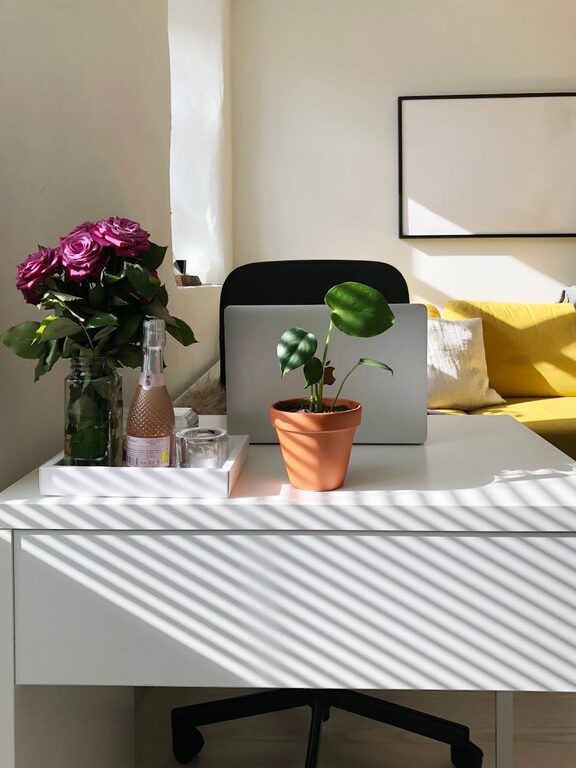
– Natural Light: Maximize daylight by positioning your desk near a window but avoid direct glare on screens.
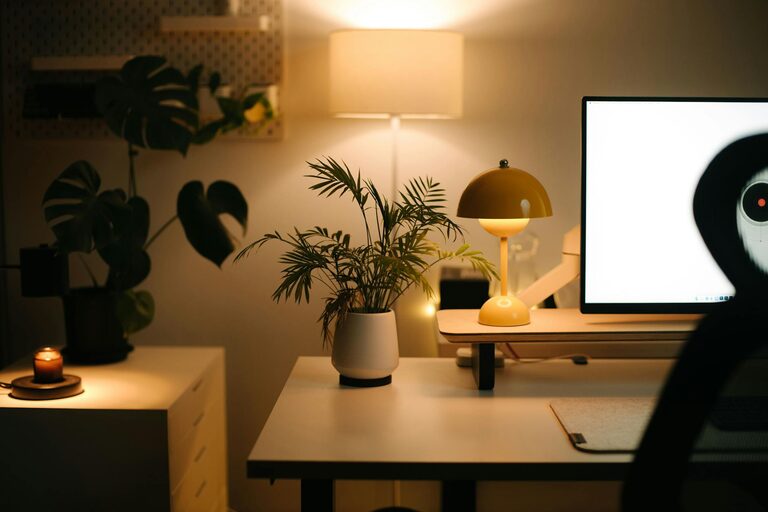
– Artificial Lighting: Use a combination of overhead lighting and task lamps for balanced brightness.
– Color Temperature: Choose lighting with a cooler, white light (around 4000K-5000K) to stay alert.
Personalize Your Space
Adding personal touches can make your office feel welcoming and motivating.
– Decor: Choose artwork, plants, or decorative items that inspire you without cluttering the space.
– Colors: Use colors that promote calmness and creativity, such as soft blues, greens, or neutrals.
– Background: If you join video meetings, arrange a tidy and professional-looking background.
Minimize Distractions
Creating boundaries helps maintain focus during work hours.
– Noise Control: Use noise-canceling headphones or add soft furnishings like curtains and rugs to absorb sound.
– Separate Work and Home Life: Set clear work hours and communicate boundaries with household members.
– Digital Discipline: Turn off non-essential notifications and use productivity apps to limit distractions.
Maintain a Comfortable Environment
Comfortable temperature and air quality impact your ability to work well.
– Temperature Control: Use fans, heaters, or air conditioning to keep the temperature comfortable.
– Air Quality: Add an air purifier or some indoor plants to improve air quality and add freshness.
– Break Area: Have a spot nearby where you can step away to stretch or relax during breaks.
Technology Setup
Reliable technology helps you work efficiently without interruptions.
– Internet Connection: Ensure a strong, stable internet connection especially if your work involves video calls or uploading files.
– Equipment: Use a good quality monitor, keyboard, mouse, and headset to improve comfort and productivity.
– Backup Power: Consider a power backup solution to avoid data loss during outages.
Foster a Routine
A structured routine can increase productivity and help maintain work-life balance.
– Daily Schedule: Set regular start and end times for your workday.
– Breaks: Take scheduled breaks to rest your eyes and stretch.
– Task Lists: Use to-do lists or planners to prioritize and track your work.
—
Creating a home office that nurtures both comfort and productivity takes some effort, but the payoff is well worth it. With thoughtful planning and simple adjustments, you can design a workspace that supports your work style and helps you thrive every day.
About the Author